
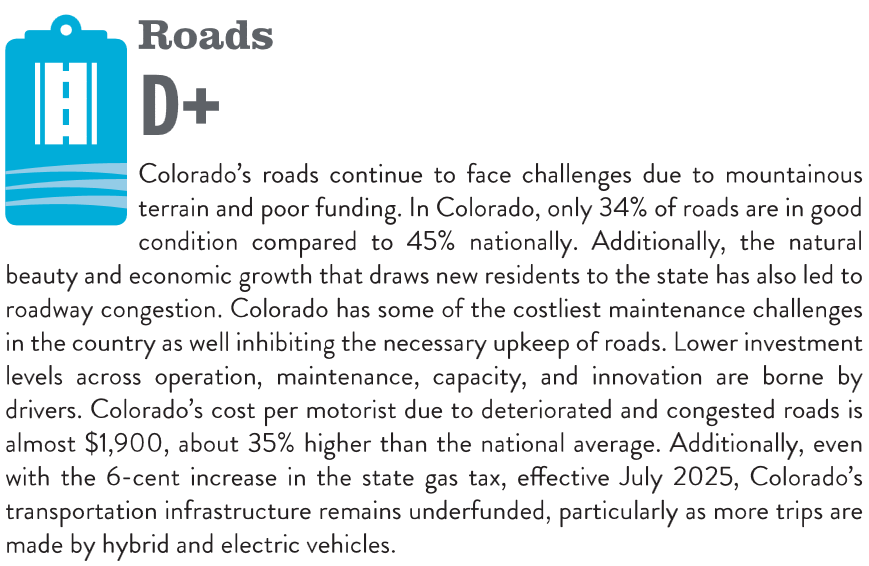
Colorado’s roads are in terrible shape. The American Society of Civil Engineers gave the state a D+ on roads in 2025, down from C- in 2020.1 The Reason Foundation ranks Colorado 46th nationally for rural interstate pavement.2 CDOT says it needs an additional $200-$300 million per year just to return the system to a state of good repair.3 Only 34% of Colorado roads are in good condition, compared to 45% nationally.1
The campaign behind Initiative 175 – Restore Our Roads Colorado – wants you to believe the problem is where the money goes. Their solution: constitutionally redirect $700-$900 million per year in existing revenue to road transportation, pulling it away from transit, EV infrastructure, bike lanes, and multimodal programs.5 No new taxes, they promise. Just money for roads.
It sounds simple. It sounds fiscally responsible. And buried in the ballot language is a two-word phrase that should stop every Coloradan cold: “building and fixing.”6
Not “fixing.” Building and fixing.
We Can’t Afford the Roads We Already Have
Here is the math that Restore Our Roads does not want you to do.
CDOT maintains over 23,000 lane miles of state highway and 3,500 bridges. Its annual budget is about $1.7 billion, and nearly half – $765 million – goes to keeping existing pavement and bridges from falling apart further.7 That spending sustains a C+ surface condition grade. Not improving. Sustaining.
CDOT’s own website says the state needs $200-$300 million more per year to return the system to good repair.3 That’s not new lanes. Not new interchanges. Just fixing what we have. And the 2025 legislature made it worse, cutting $140 million from CDOT’s budget to fill a $1.2 billion general fund hole.9
This is a pattern that has been documented for over a decade. Cities and states build infrastructure they can’t afford to maintain, count it as an asset, and then act surprised when the bill comes due. As Strong Towns wrote about a city in Minnesota: “only after our base maintenance responsibilities are completed should we even be considering reconstruction, expansion, or constructing new road segments.”10 In Kansas City, the public works department needs ten times more money each year than it can ask for, just to maintain and replace existing roads.11 Colorado’s numbers are proportionally similar.
Initiative 175 does not solve this problem. It entrenches it.
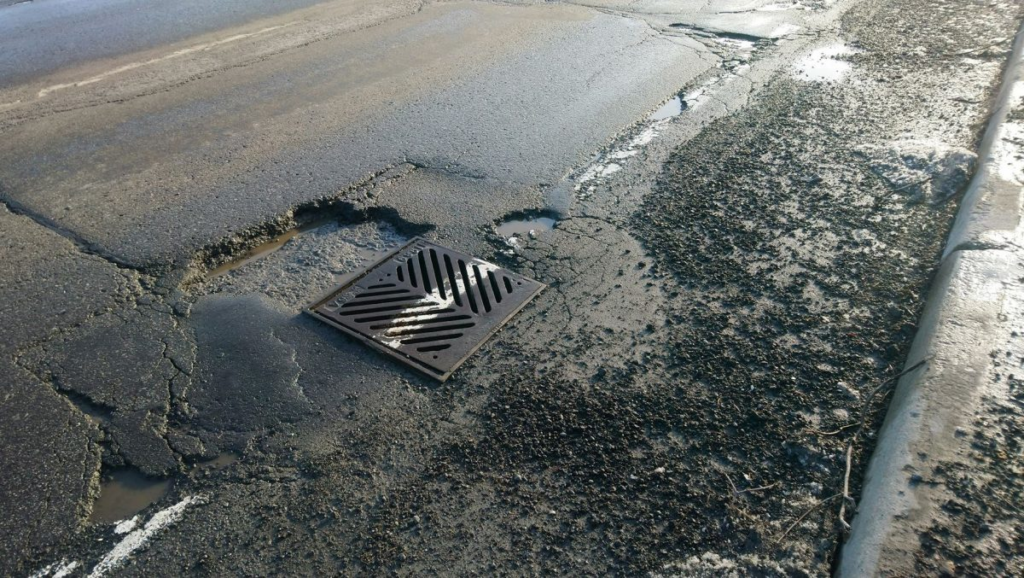
None of this is abstract for the family driving a fifteen-year-old sedan on I-25. Bad roads are expensive in ways that fall hardest on people with the least margin: the blown tire that costs a week’s groceries, the alignment job after a pothole that costs a month’s savings, the inspection failure on a car that’s the only way to get to work. The proponents of Initiative 175 are right that road conditions impose real costs on real people, and they’re right that working-class Coloradans bear those costs disproportionately.
But Initiative 175 doesn’t guarantee that family a smoother road. It guarantees more money into a system that treats new construction and pothole repair as equally valid uses of the same dollar – and in a system with those incentives, the interchange wins and the pothole waits. Meanwhile, the same family that can’t afford a car repair also can’t afford a second car, and when the transit routes, bike infrastructure, and e-bike rebate programs get defunded to pay for that interchange, they lose the alternatives that might have given them a way to reduce their car dependency. The cruelest thing about Initiative 175 is that it uses the pain of people who can’t afford bad roads to lock them into a system where they can’t afford anything else.
“Building” Is Not “Fixing”
The ballot title summarizes the measure as funding “building and fixing roads and bridges.”6 That’s already a red flag. But the actual proposed constitutional language is worse. Section 3(b)(I) of Initiative 175 defines “road transportation” to include “THE CONSTRUCTION, SURFACE REPAIRS, MAINTENANCE, AND OPERATION OF PUBLIC STREETS, ROADS, HIGHWAYS, OR BRIDGES, DESIGNED AND PRIMARILY USED FOR MOTOR VEHICLE USE.”13
Construction is listed first. Not repair. Not maintenance. Construction. And there is no prioritization – no requirement that maintenance be funded before a single dollar goes to new capacity. Construction and surface repairs are co-equal uses of the same constitutionally protected revenue stream.
That last qualifier matters, too: “designed and primarily used for motor vehicle use.” Think about what that excludes. A complete street redesign that adds protected bike lanes and widens sidewalks – is that street still “primarily used for motor vehicle use”? A road diet that converts a four-lane arterial to two lanes with bike facilities – does that still qualify? The constitutional language doesn’t just fund roads. It defines which kind of roads count, and the answer is: roads designed for cars.
Every lane-mile of new highway built under this provision will need repaving, restriping, snow removal, and eventual reconstruction for decades to come. The campaign cites CDOT’s $350-million annual shortfall as evidence of crisis.5 Then they propose a solution that constitutionally funds construction alongside repair, with no mechanism to ensure the maintenance backlog gets addressed first. That’s a household that can’t afford its mortgage responding by adding a second story.
Standard municipal accounting makes this worse. When a community builds a new road, that infrastructure comes with a future maintenance obligation. In normal accounting, that would be a liability. In the world of government accounting, it’s labeled an asset. The more roads a community builds, the “richer” it appears on paper – right up until the maintenance bill comes due.15
Induced Demand: The Highway Expansion Trap
Restore Our Roads frames congestion as a capacity problem: too many people, not enough road. Their website says “trying to force Coloradans into mass transit by prioritizing funding for these projects is not working and is unrealistic.”5
Decades of research says otherwise. The fundamental law of road congestion – confirmed by studies across multiple countries – is that expanding highway capacity generates proportional increases in driving.17 In 1995, UC Berkeley researcher Mark Hansen found that a 1% increase in state highway lane miles generated a 0.9% increase in vehicle miles traveled (VMT) within five years. Sixteen years later, Duranton and Turner confirmed the finding with far more rigorous methodology, concluding in the American Economic Review that the elasticity is approximately 1.0 – a near-perfect one-to-one relationship between new capacity and new traffic.18 Texas spent $2.8 billion widening the Katy Freeway in Houston to 23 lanes. Congestion returned to pre-construction levels within three years.17
Colorado has its own example. CDOT widened I-25 in Denver in 2006. Traffic delays returned to pre-construction levels within five years.20 Using the RMI Induced Travel Calculator, the Southwest Energy Efficiency Project (SWEEP) estimated that Colorado’s current and planned highway widening projects will generate 600,000 metric tons of new greenhouse gas pollution by 2030 – the equivalent of putting 70,000 additional cars on the road every year.20
SWEEP’s Matt Frommer was direct: we should “focus our transportation dollars on maintaining the system we have – aka ‘fix it first’ – while optimizing its use by investing in modes that move people more efficiently than single-occupancy vehicles.”20
Initiative 175 would do the opposite. By constitutionally earmarking revenue for “building and fixing” while defunding transit and multimodal programs, it locks Colorado into the expansion-and-decay cycle that created the maintenance crisis in the first place. As Strong Towns wrote in February 2026: the federal transportation system – and, by extension, the state systems modeled on it — was “designed in the 1950s to build a continental network of high-speed roads. It succeeded in that mission. But the machinery that built it never shut down.”23
Initiative 175 is Colorado’s version of refusing to shut down that machinery.
What Initiative 175 Defunds
The official ballot language – the part the campaign doesn’t put on its website – says the measure would result in “decreasing funding for other transportation-related services and programs provided by the state and local governments.”6
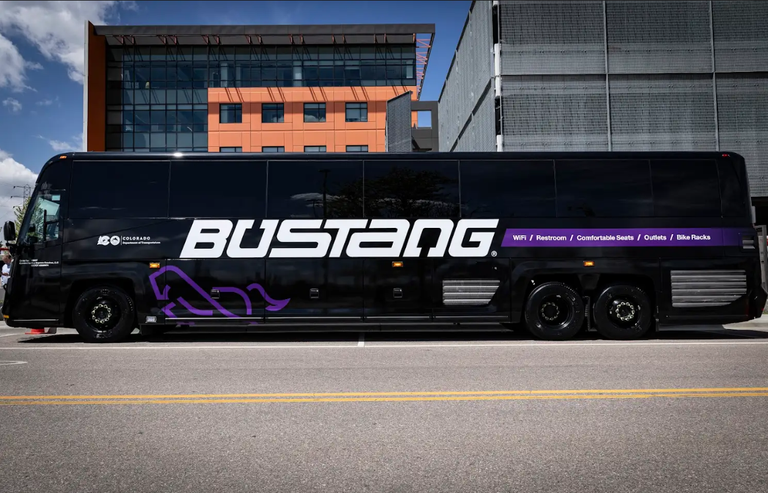
Those programs were created by SB 21-260, Colorado’s 2021 transportation funding law, which established five enterprise funds for EV charging infrastructure, electric school buses, transit electrification, e-bike rebates, air quality mitigation, and the Revitalizing Main Streets program that builds sidewalks and crosswalks in downtowns.25 SWEEP’s analysis found that over 40% of SB 21-260’s revenue funds clean transportation – EV programs, transit, multimodal infrastructure, and pollution mitigation – with the other 60% already flowing to the Highway Users Tax Fund for road and bridge projects.20
In Fort Collins, this is the kind of funding that supports Transfort service, MAX bus rapid transit operations, and the bike infrastructure that makes this city work. These aren’t luxury programs. Transfort is already running on emergency budget patches and cutting routes to stay solvent. The multimodal and transit investments that Initiative 175 would defund are the ones that give residents an alternative to driving – and they cost a fraction of a highway interchange per trip served.
The Community Access Enterprise, which funds e-bike rebates and EV charging in underserved communities? Defunded. The $115 million Revitalizing Main Streets program? Gone.20 Meanwhile, CDOT’s 10-year plan already allocates $905 million for the I-70 Floyd Hill expansion and $415 million for I-25 north expansion, while setting aside only $473 million specifically for transit.28 The state already heavily prioritizes roads over transit. Initiative 175 would make the imbalance permanent and constitutional.
A Constitutional Straitjacket
This is not a statute. It is a constitutional amendment. It requires 55% to pass,6 and it would require another constitutional amendment to undo.
That means if electric vehicles erode gas tax revenue faster than expected, if the Front Range builds viable transit, if autonomous vehicles reshape travel patterns, if a future legislature identifies a smarter funding formula – Colorado will be locked into a structure designed for 2026’s politics. Constitutions should be for rights and governance structures, not for locking in a specific transportation funding formula that benefits a specific set of stakeholders.
The campaign explicitly invokes the Noble Bill of 1979, which earmarked vehicle sales tax for roads until it was repealed in 1987.30 But the Noble Bill was a statute. The conditions that led to its repeal – competing fiscal priorities, evolving needs – are exactly the kind of legitimate trade-offs a healthy democracy should be able to make. Initiative 175 would foreclose those trade-offs. Permanently.
Follow the Incentives
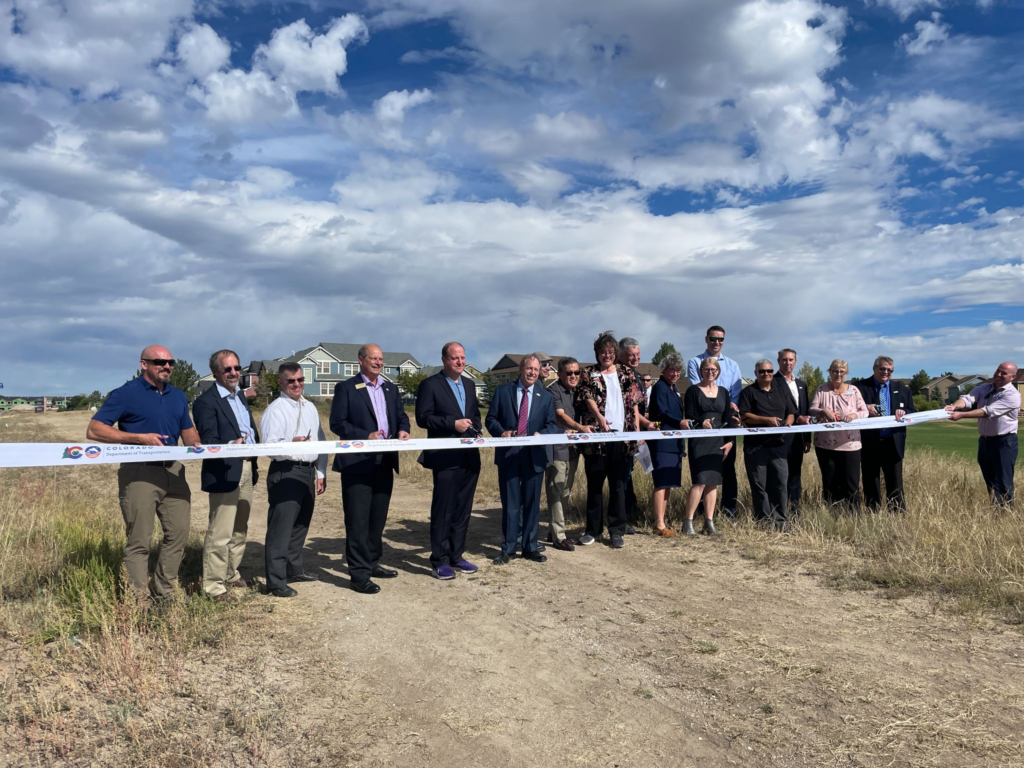
Nobody cuts a ribbon on a repaving job. No politician holds a press conference to announce a successful crack seal. New construction is visible, photogenic, and politically rewarding. Maintenance is invisible – until it isn’t.
The problem isn’t who gets paid. Contractors do the work whether it’s new asphalt or patching the old stuff. The problem is what gets prioritized. Transportation agencies at every level – federal, state, and local – have a well-documented pattern of deferring maintenance to fund new capacity.31 CDOT’s own $350 million annual shortfall exists precisely because decades of expansion spending crowded out repair budgets. Initiative 175 pours new money into the same system with the same incentives and the same “building and fixing” mandate that treats a new interchange and a pothole repair as equally valid uses of funds. Without a fix-it-first requirement, history tells us which one wins.32
Whose Safety?
The ballot title summarizes one purpose of the measure as “improving driver safety.”6 That’s already a concerning frame. But the actual constitutional text is explicit in a way the summary doesn’t convey. Section 3(b)(II) defines road transportation to include “THE DEVELOPMENT AND IMPROVEMENT OF SAFETY MEASURES FOR MOTOR VEHICLES TRAVELING ON PUBLIC STREETS, ROADS, HIGHWAYS, OR BRIDGES.”13
Not safety measures for people. Safety measures for motor vehicles.
Read that again and think about what it excludes. A crosswalk isn’t a safety measure for motor vehicles. A protected bike lane isn’t a safety measure for motor vehicles. A pedestrian refuge island, a bus shelter, a curb extension that shortens crossing distances for a child walking to school – none of these are safety measures for motor vehicles. Under this language, constitutionally protected safety spending means guardrails, rumble strips, wider shoulders, clearer sight lines, gentler curves – the design vocabulary of “forgiving” roads that protects drivers who make mistakes by giving them more room to recover at speed.
That vocabulary kills people who aren’t in cars. Sixty percent of all U.S. pedestrian fatalities occur on arterial roads designed precisely this way – wide, fast, “forgiving” to drivers, and lethal to everyone else.35 But the design isn’t even safe for the people it claims to protect. Crash severity increases exponentially with speed – for vehicle occupants too, not just pedestrians. The same wide lanes and gentle curves that encourage 50 mph on a road posted at 35 don’t just make the road more dangerous for the person in the crosswalk. They make every crash more violent for everyone involved, including the driver. These roads are dangerous because they’re designed to move cars quickly, and that design cue overrides posted speed limits. Wide lanes, long sight lines, and infrequent crossings all signal go faster to the human brain, regardless of what the sign says.36
As Wes Marshall, a civil engineering professor at the University of Colorado Denver, put it in his book Killed by a Traffic Engineer: “When structural engineers determine their design load, they do so with the expectation that if all goes well, they’ll never come close to reaching it, let alone exceeding it. Design speed is a different animal because people are different animals. People crossing a bridge have no idea what the structural engineers used for their design load. Drivers may not know the exact design speed either, but they adapt to meet it. When the design speed is higher, drivers drive faster. When drivers drive faster, we lose more lives on our streets.”37
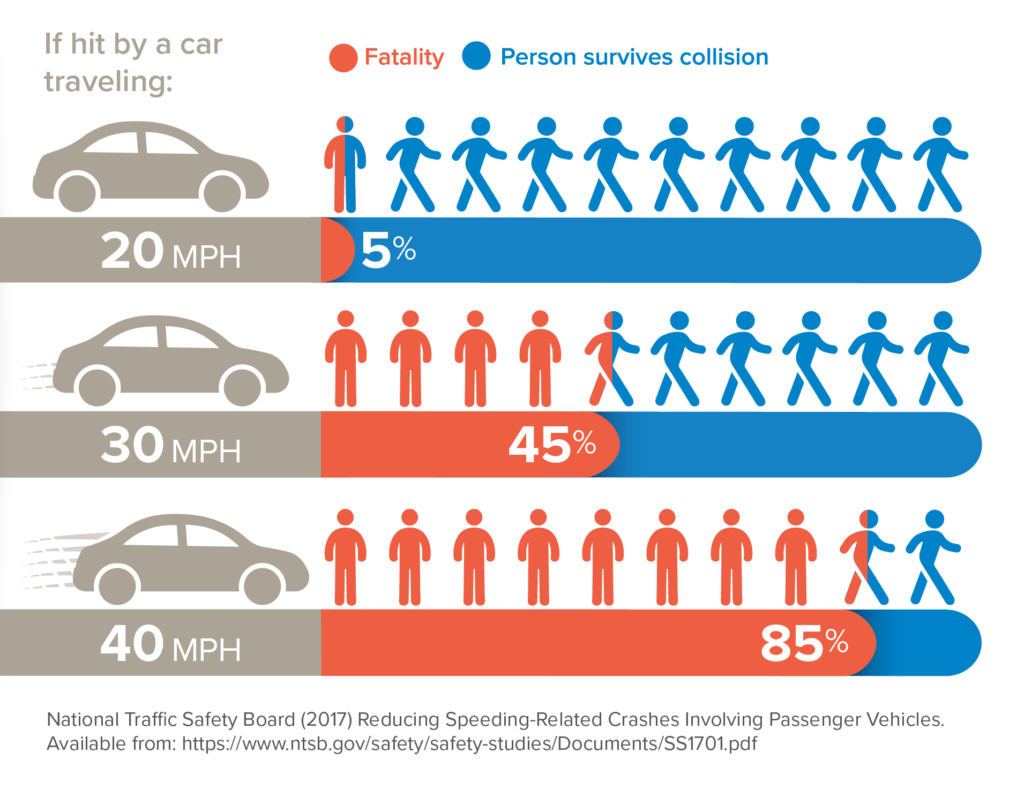
The reforms that actually reduce fatalities for all users – narrower lanes, protected crossings, traffic calming, lower design speeds – make streets less forgiving to speeding drivers and more safe for human beings outside of vehicles. Initiative 175’s constitutional language points in the opposite direction. It tells CDOT and local agencies exactly whose comfort to optimize for, and it’s the person behind the wheel. The kid biking to school on a Fort Collins side street, the elderly resident crossing College Avenue, the Transfort rider waiting at an unsheltered stop – none of them are the constitutionally protected user.
Baking “safety measures for motor vehicles” into the state constitution doesn’t just reflect car dependency. It mandates it. Pedestrians make up 8% of total trips in the U.S. but account for 19% of traffic fatalities.38 Meanwhile, 30% of low-income households don’t own or lease a vehicle at all – compared to just 3% of the wealthiest households – and those who do own one spend 38% of their after-tax income on transportation.39 That’s the trap car dependency creates: own a car you can barely afford, or don’t and lose access to everything. A constitutional amendment that defines safety exclusively around motor vehicles and defunds every alternative mode locks the people least able to afford driving into a system designed for no one else. A state constitution should not be in the business of defining which residents’ lives count on a public right-of-way.
What We Should Do Instead of Initiative 175
Colorado’s infrastructure crisis is real. The D+ on roads is real. The gas tax frozen since 1991 is a genuine problem. The $140 million in recent CDOT budget cuts made it worse.9
But the answer to “we can’t afford to maintain our roads” is not “constitutionally guarantee more money for building new ones.”
Here’s the frustrating part: there is a legitimate problem buried under this bill. In 2025, the legislature cut $140 million from CDOT to fill a general fund hole.9 That happened because transportation funding in Colorado is statutory – the legislature can raid it whenever the budget gets tight, and it does. A constitutional amendment that simply prevented that kind of siphoning – that said transportation revenue must be spent on transportation, full stop – would have been a defensible proposal. It might even have earned broad support from transit advocates, road builders, and fiscal conservatives alike.
But that is not what Initiative 175 does. It doesn’t just protect transportation funding from general fund raids. It redefines “transportation” to mean roads for cars, strips funding from every other mode, locks construction and repair into co-equal status with no fix-it-first mandate, and writes “safety measures for motor vehicles” into the constitution as if no one else uses the road. The bill takes a real grievance – legislators raiding road money – and uses it as a vehicle for a much larger project: constitutionally guaranteeing that Colorado keeps building roads it can’t afford to maintain while defunding every alternative that might reduce the need to build them.
A fiscally responsible road funding measure would mandate that maintenance obligations be fully funded before a single dollar goes to new construction. It would require lifecycle cost analysis for any new capacity project, proving the long-term maintenance burden won’t exceed the long-term revenue generated. It would preserve the flexibility to invest in transit, bike infrastructure, and land use reforms that reduce demand for driving – because the cheapest lane-mile to maintain is the one you never had to build.
Initiative 175 does none of these things. It takes a real problem – crumbling roads – and uses it to constitutionally guarantee more of the spending pattern that created the crisis. More building. More future liabilities. Less flexibility. Fewer alternatives.
If we can’t afford the roads we have, we should not be building more.
Strong Towns Fort Collins is a local conversation working to make Fort Collins a safer, more livable, and more financially resilient community.
- American Society of Civil Engineers, 2025 Infrastructure Report Card: Colorado. Overall grade C-; Roads grade D+; only 34% in good condition vs. 45% nationally. ↩︎
- Reason Foundation, 29th Annual Highway Report: Colorado. Colorado ranks 42nd overall, 46th for rural interstate pavement, 45th for urban interstate pavement. ↩︎
- Colorado Department of Transportation, Improve the Condition of Our Roadway System. “Returning our system to a state of good repair would require an additional $200–$300 million per year.” ↩︎
- Restore Our Roads Colorado, Initiative 175 campaign website. Claims $700–$900 million in additional annual road funding; cites $350 million shortfall; describes transit funding as “not working and unrealistic.” ↩︎
- Colorado Secretary of State, Results for Proposed Initiative #175. Official ballot title defines “road transportation” as “building and fixing roads and bridges, improving driver safety, covering related planning and engineering costs, and funding for the Colorado State Patrol” and states the measure would result in “decreasing funding for other transportation-related services and programs.” Title Board determined 55% supermajority applies. ↩︎
- Colorado Department of Transportation, FY 2025-26 Proposed Budget Allocation Plan. Total budget approximately $1.7 billion; $765 million for asset management and maintenance. See also Transportation Funding page: annual budget $1.55 billion with nearly half going to maintenance. ↩︎
- Colorado Sun, “Colorado legislature passes $43.9 billion budget that cuts transportation, social programs to fund rising health care costs,” April 21, 2025. SB 25-257, SB 25-258, and SB 25-264 combined to cut approximately $140 million from CDOT. ↩︎
- Charles Marohn, “Roads and Debt,” Strong Towns Archive. On Brainerd, MN: maintenance obligations should be met before considering expansion or new construction. ↩︎
- Charles Marohn, “We’ve Built Cities We Can’t Afford,” Strong Towns, April 8, 2020. Kansas City public works needs 10x its annual budget for road maintenance and replacement. ↩︎
- Initiative 175, Full Text (2025-2026 #175 – Final Text), filed November 7, 2025. Proposes adding Section 22 to Article X of the Colorado Constitution. Section 3(b)(I) defines road transportation as “THE CONSTRUCTION, SURFACE REPAIRS, MAINTENANCE, AND OPERATION OF PUBLIC STREETS, ROADS, HIGHWAYS, OR BRIDGES, DESIGNED AND PRIMARILY USED FOR MOTOR VEHICLE USE.” Section 3(b)(II) covers “THE DEVELOPMENT AND IMPROVEMENT OF SAFETY MEASURES FOR MOTOR VEHICLES TRAVELING ON PUBLIC STREETS, ROADS, HIGHWAYS, OR BRIDGES.” Section 3(c) defines covered revenue as all state sales/use/excise taxes or fees on motor vehicles and fuel, plus two-thirds of state sales and use taxes on parts, equipment, materials, and accessories affixed to a vehicle. ↩︎
- Charles Marohn, “The More We Grow, the Poorer We Become,” Strong Towns Archive. Roads are counted as assets despite carrying unfunded maintenance liabilities. ↩︎
- Strong Towns Archive, “The Fundamental, Global Law of Road Congestion”. Katy Freeway example and research confirming elasticity of ~1.0 between capacity and traffic. See also “5 Reasons Why We Should End Highway Expansion”. ↩︎
- Mark Hansen, “Do New Highways Generate Traffic?” Access, No. 7, Fall 1995, University of California Transportation Center. Hansen found a 0.9 elasticity between California state highway lane miles and VMT. Note: an FHWA response paper (Kevin Heanue, “Highway Capacity and Induced Travel,” TRB Circular 481, 1998) argued this overstates truly induced travel by including route diversions from local roads, and estimated highway capacity accounts for only 6–22% of total VMT growth. However, Gilles Duranton and Matthew A. Turner, “The Fundamental Law of Road Congestion: Evidence from US Cities,” American Economic Review 101, no. 6 (October 2011): 2616–2652, confirmed the ~1.0 elasticity with more rigorous methodology using instrumental variables across all U.S. metro areas, and is now the standard reference in the field. ↩︎
- Southwest Energy Efficiency Project, “A Breakdown of Colorado’s Giant Transportation Funding Bill,” June 15, 2021. I-25 widening delays returned in 5 years; RMI calculator estimates 600,000 metric tons new GHG; 40%+ of SB 21-260 revenue for clean transportation; Revitalizing Main Streets $115 million; “fix it first” framing. ↩︎
- Charles Marohn, “We’ve Been Fighting the Wrong Transportation Fight,” Strong Towns, February 16, 2026. Federal transportation system designed for highway construction never shut down after completing its mission. ↩︎
- Colorado General Assembly, SB 21-260: Sustainability of the Transportation System. Created Community Access Enterprise, Clean Fleet Enterprise, Clean Transit Enterprise, Nonattainment Area Air Pollution Mitigation Enterprise, and modified Statewide Bridge and Tunnel Enterprise. ↩︎
- The Sum and Substance, “Advancing Ballot Initiative Seeks Boost for Road Funding,” November 2025. CDOT’s 10-year plan: $905M for I-70 Floyd Hill, $415M for I-25 north, $473M for transit. ↩︎
- Complete Colorado, “Initiative 175: Ensuring Highway Dollars Actually Go to Roads,” March 5, 2026. Greg Walcher on Noble Bill history: passed 1979, repealed 1987. ↩︎
- Colorado Newsline, “Proposed Colorado Transportation Measure Would Redirect Funds from Electrification to Roads,” July 24, 2025. Tony Milo, CCA Executive Director, as primary spokesperson. See also Charles Marohn, “We’ve Been Fighting the Wrong Transportation Fight,” Strong Towns, February 16, 2026, on the systemic bias toward expansion over maintenance in transportation funding. ↩︎
- Strong Towns Archive, “The Traffic Model Deceit: How Highway Agencies Manipulate Data to Justify Wasteful Expansion,” October 23, 2024. “Highway departments, eager to secure funding for flashy new construction, routinely shortchange the unglamorous work of fixing potholes and shoring up aging infrastructure.” ↩︎
- Smart Growth America / Strong Towns, “How Street Design Shapes the Epidemic of Preventable Pedestrian Fatalities,” July 18, 2022. 60% of 2020 pedestrian deaths occurred on non-interstate arterial highways; in urbanized areas, 64–67% on roads comprising only 15% of the network. Streets designed for car speed are dangerous for everyone else. ↩︎
- Strong Towns Archive, “This Video Reveals the Not-so-Secret History of Deadly Street Design,” March 13, 2019. “Forgiving design” – wide lanes, gentle curves, broad clear zones – induces higher speeds regardless of posted limits. “When you’re hit by a car going 20 miles an hour, nine out of 10 times you’ll survive.” At 40 mph, those odds invert. See also “4 Reasons We Must Build Our Streets for People (Not Just Cars)”. ↩︎
- Island Press, Killed by a Traffic Engineer June 2024. Wes Marshall, author of Killed by a Traffic Engineer and professor of Civil Engineering at the University of Colorado Denver. ↩︎
- Southwest Energy Efficiency Project, presentation to Colorado Transportation Legislative Review Committee, September 8, 2025. Pedestrians make up 8% of total trips but account for 19% of traffic fatalities. Note: SWEEP’s claim that “30% of Americans are non-drivers” appears to be drawn from BTS data on vehicle ownership by income quintile (see footnote 24) rather than a general population figure. ↩︎
- Bureau of Transportation Statistics, “The Household Cost of Transportation: Is it Affordable?” Data Spotlight, September 2023. 30% of lowest-income households (before-tax income under ~$25,000) did not own or lease a vehicle in 2022, compared to 3% of the highest-income households (before-tax income over ~$245,000). Low-income households that owned a vehicle spent 38% of after-tax income on transportation; those without a vehicle spent 5%. ↩︎
Leave a Reply