View our “Paid Parking” info hub that includes a short video explaining the concept, links to our previous articles, and more.
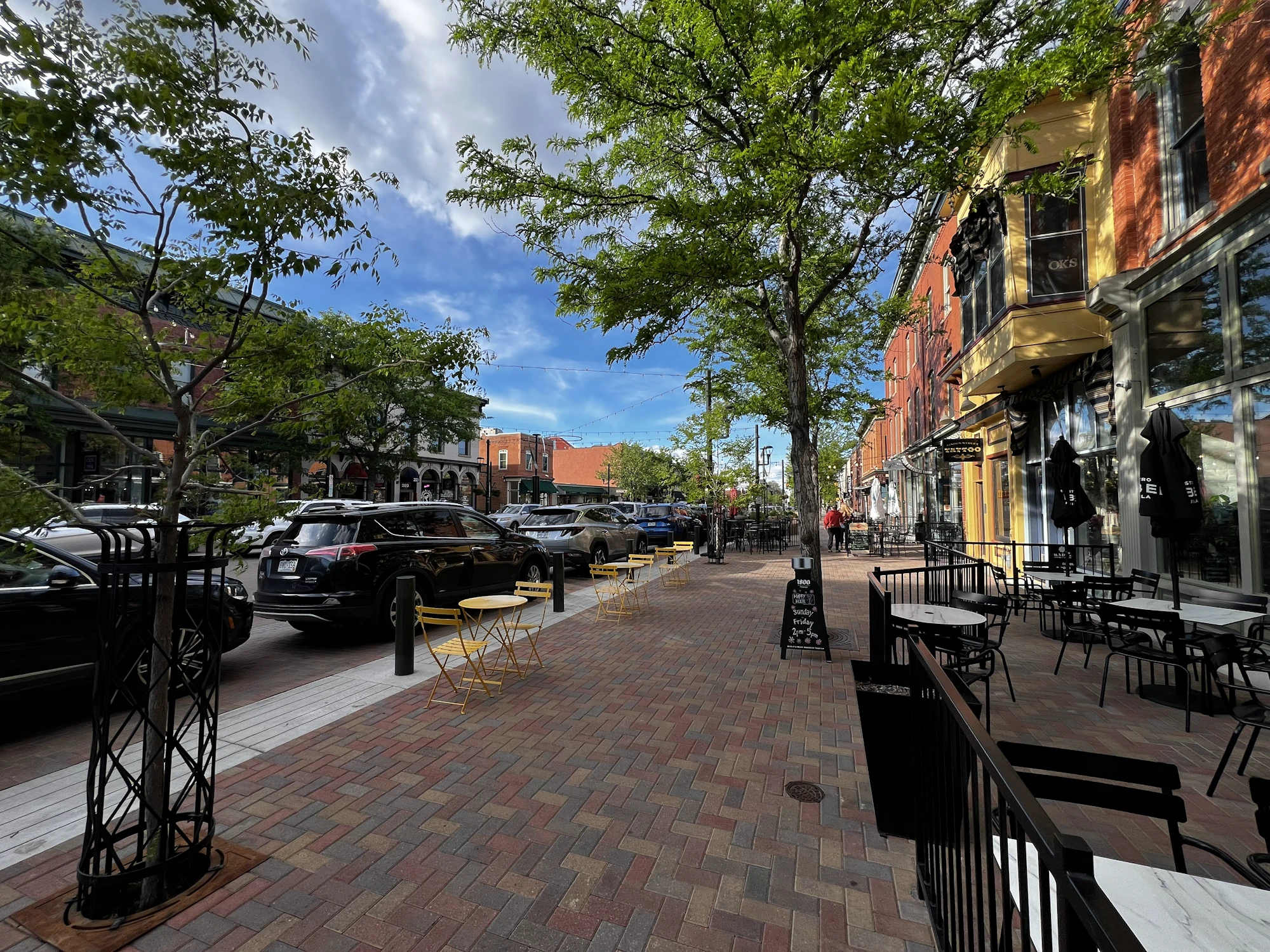
It’s a Friday evening in Old Town. You’ve circled the block twice – past the Square, down Mountain, back up College – watching brake lights and hazards, scanning for an opening that isn’t there. The kids are asking how much longer. You’re doing the math on whether dinner downtown is still worth it, or whether you should just head to the place by the highway with the big parking lot.
Or maybe you found a spot. You’re an hour and a half into dinner, mid-conversation, and someone at the table checks their phone and stands up: I have to go move the car. The two-hour shuffle. According to the Downtown Development Authority’s own survey, 81% of downtown visitors now stay longer than two hours – up from 49% a decade ago.[18] Which means the current system is engineered to interrupt the very thing Old Town does best: making people want to linger.
We’ve written two articles about this. In the first, we made the case for why Fort Collins’ “upside-down” parking system – free curbs, paid garages – is broken, inequitable, and financially unsustainable. In the second, we examined the evidence behind the most common opposition arguments and found they didn’t hold up. We support paid on-street parking in downtown Fort Collins. That hasn’t changed.
But supporting paid parking doesn’t mean supporting any version of paid parking. To its credit, the current proposal contains the beginnings of the two ideas that made paid parking work in the cities where it worked: revenue framed as flowing back into the downtown that generates it, and pricing that can adjust to real-world outcomes. The fragments are there. This article is about why Fort Collins should go further – why those two ideas need to be commitments rather than possibilities, and why the difference isn’t a policy detail. It’s the difference between a downtown that funds its own future and one that waits for someone else to save it.
Nobody wants to pay for parking. That’s not the question.
Nobody wants to pay for parking. Opponents of the proposal are right about that, and pretending otherwise insults everyone’s intelligence. The case for paid parking has never been that paying is pleasant. It’s that “free” parking in a place as beloved as Old Town was never free – we’ve just been paying in a currency the city doesn’t collect: the twenty minutes of circling, the interrupted dinner, the trip downtown you didn’t take because you assumed you couldn’t park.
That trip is already happening – or rather, not happening. Some people in our community hesitate to come downtown today – not because of meters, which don’t exist, but because of the perceived difficulty of parking under the current free system.[18] The DDA survey found 30% of visitors report difficulty finding parking, and over 4% simply leave when they can’t.[18] The status quo is already costing Old Town customers. The question was never pay versus free. It’s pay-and-watch-the-place-get-better versus keep-paying-in-frustration-and-get-nothing.

And here’s what’s striking about this debate: on the diagnosis, nearly everyone agrees. The years of deferred maintenance. The nearly 8,000 “courtesy tickets” written in 2024 – zero-dollar warnings that made the two-hour limit a polite fiction.[4] The stairwell repair that was quoted at $55,000 in 2019, deferred due to budget disruptions during COVID, and eventually cost $1.2 million to replace.[21] Even the city’s decision, over multiple opportunities, to pass on modernizing its parking systems. Critics of paid parking cite this record as reason for distrust. We cite the same record as evidence that the current system cannot maintain itself. The disagreement, when you strip away the rhetoric, is remarkably narrow: whether the most valuable public spaces in the city – the curbs of Old Town – can remain un-managed forever.
They can’t. But how they’re managed is everything.
Old Town is our living room. Let’s fund it like one.
Think about what Old Town actually is to this city. It’s where you take out-of-town guests first. It’s first dates and farmers markets, holiday lights and patio season. It’s the place that makes Fort Collins feel like Fort Collins. We already treat it as the shared heart of the city – the community’s living room.
What we’ve never had is a mechanism for the people who love it to invest in it directly.
Right now, the money you might spend at a downtown meter – under the current proposal – would flow into the city’s Parking Services budget.[4] Necessary, perhaps, but invisible. And invisibility is precisely the pattern in every city where paid parking has genuinely hurt a downtown. In Hamtramck, Michigan, half the meter revenue went to a private contractor and the city’s half vanished into the general budget; nine businesses on the main commercial street closed in a single year before the city ripped the meters out.[8] In Cleveland, meter revenue flowed to the general fund until businesses revolted, and the city scrambled to create a neighborhood reinvestment fund only after the backlash.[9] As Daniel Herriges of the Parking Reform Network put it at a recent Strong Towns webinar, people hate paying for parking when the money disappears into what “might as well be a black hole.”[23] The neighborhood gets the pain and can’t see a dime of the return.
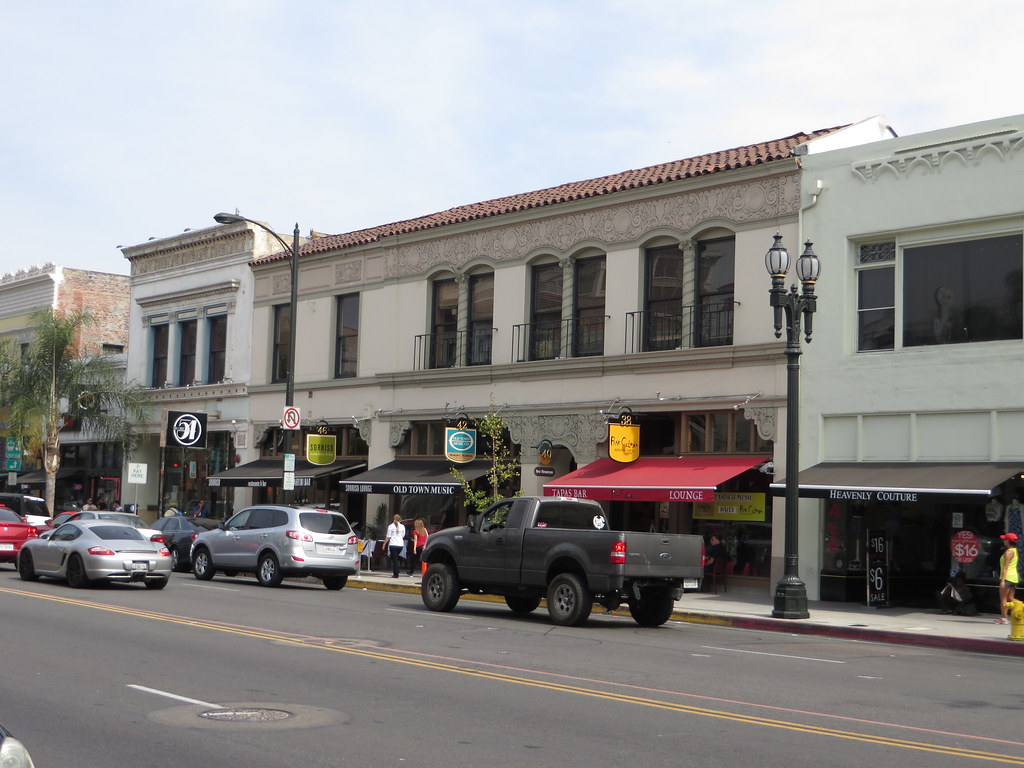
Now look at where paid parking became something communities actually defend. In Pasadena’s Old Town, the city pledged to return the net meter revenue to the district itself. The money became new sidewalks, restored alleys, decorative lighting, street furniture. Within five years, sales tax revenue in the district quadrupled.[10] [11] In Ventura, California – an already-active downtown, not a turnaround story – the same model generated $3.3 million for the district over six years, and by year three, 83% of business owners supported the meters, with the downtown business association reporting that merchants had become some of their most vocal proponents.[12] In Pittsburgh’s Southside Flats, a nightlife district, extended evening meter hours funded foot patrols – the revenue directly answering the safety concern that pricing had raised.[23] In Boulder, meter revenue funds transit passes for six thousand downtown employees.[13]
The difference between the failures and the successes was never whether a city charged for parking. It’s whether the community could see the return – and had a hand in directing it.
This is what Donald Shoup, the UCLA economist whose work underpins the modern parking reform movement, called a Parking Benefit District: a defined area where net meter revenue is earmarked by ordinance for improvements within that same district, guided by a committee of the people who live and work there.[2] The Federal Highway Administration has documented PBDs in at least 17 U.S. cities.[14] It isn’t exotic. Boulder has run a version since 1970 under the same Colorado home-rule authority Fort Collins has.[13]
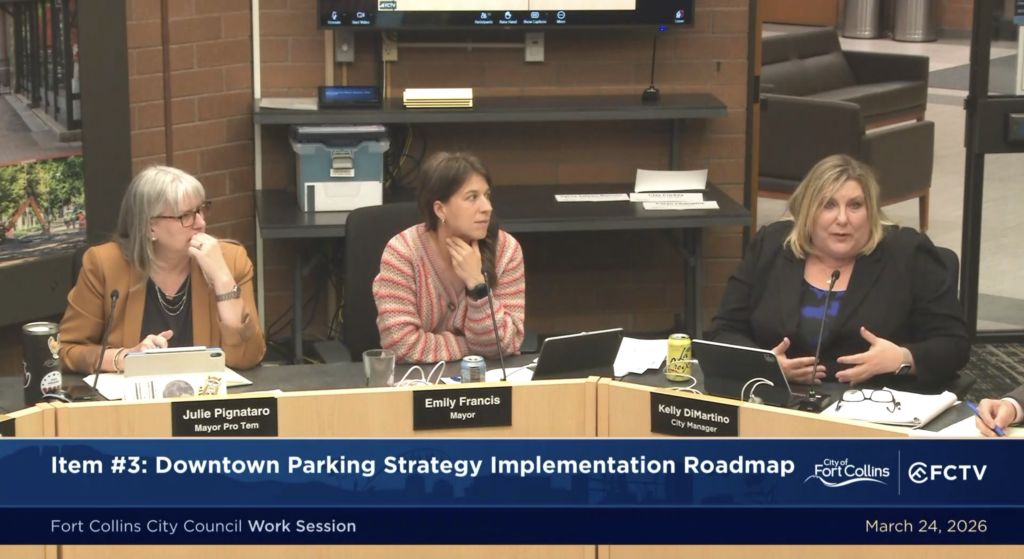
Picture what that means here. The quarters and card-taps at an Old Town kiosk become the flower baskets on College Avenue. The alley lighting. The safety patrols on a Friday night. The events in the Square. First priority goes to maintaining the garages we already own – the unglamorous obligation the system has been quietly failing for years – and everything beyond that is directed by a committee of Old Town business owners, residents, and the DDA, deciding together what our downtown needs next.[22] It also answers a concern Mayor Francis raised at the March work session: that parking revenue might simply pile up until it justifies building another garage.[4] A benefit district puts that decision in the community’s hands, not a fund balance’s. We maintain what we have, invest the rest in the place, and don’t build a garage just because we can.
And there’s a deeper reason for urgency. The DDA – the institution that has quietly funded Old Town’s renaissance since 1981 – sees its primary funding tool, tax increment financing, expire in 2031.[16] The generation before us built the mechanism that made Old Town what it is. That mechanism is sunsetting. A Parking Benefit District is how this generation hands downtown a self-sustaining future instead of a funding cliff: a district that generates its own strength, rather than an occasional destination waiting on someone else’s budget line.
At our June 30th panel, Parking Services confirmed that revenue under the current proposal would go toward deferred maintenance, technology upgrades, and potentially amenities like holiday lighting and public art – all framed as benefiting the paid parking area.[22] This is leaning in the right direction, but there is no formal Parking Benefit District in the proposal – no dedicated district fund, no community governance, no ordinance guaranteeing the money stays.[22] Establishing one requires a city ordinance, not a multiyear study, not state legislation, not a ballot measure. Council Member Conway advocated for exactly this structure at the March work session, arguing revenue should fund improvements identified by businesses themselves.[7] The instinct is on the dais. It needs to become a commitment.
The right price is not one price.
The second idea sounds technical but is really about fairness – and about not repeating the single most common mistake in the history of parking meters.
A frequently cited academic study on parking and retail comes from Kent Hymel, an economist who observed customer traffic at businesses in Belmont Shore, a walkable commercial strip in Long Beach, California.[1] Opponents of paid parking love this study, because it found that a $0.50/hour meter fee reduced customer traffic at two Starbucks locations by nearly 30%. What they don’t mention is when that happened: during off-peak morning hours, when spaces sat plentiful and empty – the meter charging for scarcity that didn’t exist. During busy evening periods, the same fee was too low to free up a single space. One flat price, wrong in both directions, on the same street.[1] Hymel’s own conclusion is the opposite of how his study gets used: “conventional meters with demand-invariant fees are a poor tool,” and “the results support the case for more flexible parking fees, ones that vary over time and location.”[1]
This is Shoup’s first principle: charge the right price – the lowest price that keeps one or two spaces open on every block.[2] Not a punitive price. Not a revenue-maximizing price. The lowest price that means when you drive downtown on a Friday night, there is a spot waiting for you within a block of where you’re going. That’s the entire point. The price isn’t the product – the open space is.
And the right price is not one price. A Friday evening near the Square and a Tuesday morning on a side street are different markets. Fort Collins’ current proposal actually half-acknowledges this: it charges $2/hour on-street, $1.50 in surface lots, and $1.00 in garages with the first hour free – pricing that varies by convenience of facility.[4] But within the on-street system, every block, every hour, every day gets the same flat $2. Too high for that quiet Tuesday morning – empty metered spaces, opponents’ fears made real. Possibly too low for that Friday night – the scarcity the meters were supposed to fix, unfixed.
We know how this movie ends because other cities have screened it for us. Redding, California charged a flat rate, watched spaces sit empty, and lost $5,000 a month before its program became a regional cautionary tale.[3] San Francisco, meanwhile, ran the counter-experiment: between 2011 and 2013, the city adjusted rates block by block and hour by hour based on actual occupancy. Parking search time dropped 43%. And the average meter rate went down 4% – because half the meters had been overpriced, and demand-responsive pricing cut them.[5] [6] Sales tax revenue in the areas with demand-based pricing rose 35%, outpacing the rest of the city.[6]
Dynamic pricing is also the honest answer to a legitimate worry: spillover onto nearby residential streets. Kelly Blynn of the Colorado Energy Office addressed this directly at our panel – the state’s own best-practices guide treats neighborhood permit programs and shared parking as essential companions to pricing the curb.[22] Fort Collins already runs a residential permit program with escalating prices, and better use of private lots in evening hours should absolutely be part of the strategy. But shared parking and permits alone can’t solve the core problem: the most desirable blocks in the city are in such high demand that if we want one or two spaces open per block, that demand has to be managed by pricing it at something during peak times. There is no configuration of garage control arms and payment apps that opens up a curb space on Mountain Avenue at 7 PM on a Friday. Only a price does that.
Note: Dynamic pricing for parking is typically not real-time. Parking occupancy data would be reviewed monthly/quarterly/etc, block-by-block, and prices are adjusted up or down based on time of day. The goal is not to charge a minute-by-minute customer-by-customer dynamic rate that is constantly fluctuating.
This is where the current proposal comes closest – and stops short. At our June 30th panel, Parking Services Senior Manager Eric Keselburg confirmed the kiosk systems being evaluated can support rate adjustments, that dynamic pricing is part of the long-term roadmap, and – to his credit – that rates can be adjusted after implementation, including downward, if occupancy or foot traffic drops.[22] That responsiveness is worth crediting: it means the system can self-correct in a quarter rather than drift for years. The willingness is there. The hardware is there. What’s left is timing – the initial rollout would use static flat rates for simplicity, with demand-responsive pricing treated as a later refinement.[22] But the flat-rate phase is precisely where other cities’ programs ran into trouble, and skipping it costs nothing: demand-responsive pricing requires no extra budget to specify in the procurement documents and adds no time to the implementation schedule. Council Member Conway argued for exactly this at the March work session – enforcement hours and rates that follow actual demand rather than administrative convenience.[7] The roadmap already ends in the right place. Start there.
What this looks like for the people who are worried
The loudest fears about this proposal deserve straight answers – not because the fears are all well-founded, but because the people holding them love Old Town too.
The downtown worker. The claim circulating is that workers will pay hundreds of dollars a month to park. Look at what’s actually proposed: on-street parking is capped at four hours – deliberately unusable for a full shift – and the current system already limits curb parking to two hours, meaning all-day free parking for workers has been against the rules for years; it was simply unenforced.[4] The real status quo for a downtown server isn’t free parking. It’s playing musical chairs with her car in the middle of a shift, now under newly increased fines. The proposal includes discounted garage permits and employer-purchased options, and free time-limited and unrestricted parking remains within a reasonable walk of the core.[22] Better still: Conway raised a mode-neutral parking cash-out at the March session – if the city subsidizes employee parking, the employee who bikes or takes the bus gets the same value in cash.[4] Under that model, the worker who doesn’t drive comes out ahead of where she is today. A Parking Benefit District is the natural home for exactly this kind of program.
The nearby resident. The fear is that paid parking pushes thousands of cars onto your street. The evidence from other cities suggests the overflow is usually far smaller than predicted – most visitors value convenience over saving a dollar or two, and free garage and lot options remain closer than your block. But if spillover does materialize, Fort Collins already operates the tool that handles it: a residential permit program with escalating prices, ready to extend to affected blocks. The response is a policy dial, not a crisis.
The visitor on a quick errand. The proposal includes roughly fifty designated 30-minute free spaces per block face for in-and-out trips, and the first hour in every garage stays free.[4] The quick trip downtown survives.
The business owner. You are the intended beneficiary of the entire design. A space that turns over is a space your next customer can use; Shoup’s target of one to two open spaces per block is, functionally, a guarantee that your storefront is reachable at peak hours.[2] And under a benefit district, you get something no version of the status quo offers: a seat on the committee that decides where the revenue goes. In Ventura, the merchants who fought the meters became their most vocal defenders within three years – not because they were talked into it, but because they watched the money come back.[12]
Some customers say they’ll go elsewhere. A few might. But Old Town isn’t a commodity competing on parking price like a strip mall – 52% of visitors come specifically for dining, 61% visit at least weekly, and these aren’t substitutable trips.[18] People don’t abandon the place they love over a dollar or two. They abandon places that stop being worth the trip – and the circling, the shuffle, the “I assumed I couldn’t park” are what’s eroding that today.
Do the homework that’s overdue. Then act.
At the March 24 work session, Council deferred the code change ordinance to mid-to-late summer pending a clearer financial picture of the parking system’s obligations and a demand study due in June.[7] Some have also called for a formal economic impact study.
These are not the same thing, and they shouldn’t be treated the same way.
The financial clarity Mayor Francis and Council Member Nelsen are demanding – the size of the maintenance backlog, the target fund balance, where exactly the O&M shortfall lands – is legitimate and frankly overdue. Francis noted she’d asked for the funding gap number back in November and still hadn’t received it.[7] Staff reports parking services breaks even on operations around $3.1 million annually but can’t build reserves, leaving a gap of roughly $500,000 a year plus major repairs.[7] Nailing down those numbers isn’t delay – it’s the baseline any responsible pricing decision gets built on. Finish it.
The demand study is already funded and lands in June. It will provide block-level occupancy data – which, usefully, is exactly what you need to calibrate initial dynamic pricing rates. Fine.
But an additional economic impact study is different territory. At our June panel, Council Member Pignataro walked the room through 22 years of Fort Collins parking history – six separate occasions where paid on-street parking came before Council, each supported by data or recommendations, each shelved.[22] The data has never changed. The recommendation has never changed. And an economic study would face a problem no consultant can solve: it would be predicting the behavior of a system that doesn’t exist. The best-known study in the literature examined a flat-rate system with no reinvestment[1] – it can’t tell you what happens under a benefit district with dynamic pricing, because that’s not what it studied. The closest evidence for that scenario is San Francisco, Pasadena, and Ventura – and it’s positive.[5] [10] [12]
The Strong Towns approach to public investment applies here. As Chuck Marohn writes: “We don’t form a committee. We don’t hire a consultant. We don’t pause eighteen months while our grant application is processed. We’ve humbly identified a struggle and then identified the next smallest thing we can do about it, so we just go out and do that thing.”[19] Paid parking with dynamic pricing is precisely this kind of small bet: reversible (rates can drop, hours can shrink, meters can come out – cities have done all three), and generating real feedback from day one – occupancy, revenue, sales tax, surveys – instead of predictions from behind a desk.[20]
Every month of additional delay has a price, and we’ve already seen the invoice: a $55,000 stairwell repair deferred into a $1.2 million replacement.[21] Meanwhile the general fund keeps subsidizing a parking system that primarily benefits people who drive downtown – even as Transfort service gets cut, an irony Council Member Nelsen named directly.[7] And Pignataro has put the political risk plainly, at the work session and at our panel: a new council seated in 2029 could reverse course entirely, and the window may close again – as it has six times before.[7] [22]
What we’re asking for
Three years from now, this is what getting it right looks like. You drive downtown on a Friday evening and find a space within a block – because the price at that hour is set to keep one open. On a quiet Tuesday morning, that same block costs a fraction as much, or nothing. You walk past alley lighting and flower baskets that the kiosks paid for, past a sign that says so. The server who brings your dinner either parked in a garage with a discounted permit or took the cash instead and biked. And when the DDA’s funding tool sunsets in 2031, Old Town doesn’t face a cliff – because the district has been funding itself, governed by the people who know it best.
None of that requires inventing anything. It requires three commitments:
Make dynamic pricing a day-one requirement. Specify demand-responsive rate capability in the kiosk RFP. Set an initial schedule that varies by block and time of day. Target 75–85% occupancy and commit to quarterly adjustments based on actual data – in both directions. This isn’t a study. It’s a line in a procurement document.
Work toward a Parking Benefit District. Direct the City Attorney to draft an ordinance establishing an Old Town PBD – a dedicated revenue fund, a community advisory committee, and a statutory commitment that net revenue stays in the district after garage maintenance is covered. This runs in parallel with everything else and delays nothing. What it buys is the thing no flat proposal can: a visible, accountable answer to “where does the money go?”
Finish the financial homework, then act. Complete the O&M analysis and the June demand study – due diligence that should have happened earlier. Then resist the pull of a seventh round. Twenty-two years of consistent recommendations, a 3,140-person survey, and two decades of national implementation data are enough. The next step isn’t another study. It’s a small bet on the place we love most.
Old Town is the most beloved, most productive, most irreplaceable district in Fort Collins. Nobody wants to pay for parking – but everybody wants the Old Town where the spot is open, the alley is lit, the patio is full, and the district that gives this city its heart is paying its own way into the next generation. That downtown is available. Dynamic pricing and a Parking Benefit District are simply how everywhere that has it, got it.
Fort Collins doesn’t need to invent the model. It just needs to adopt it.
[1]: Hymel, K. (2014). “Do parking fees affect retail sales? Evidence from Starbucks.” Economics of Transportation, 3(3), 221–233. The study observed six retail establishments in Belmont Shore, Long Beach, California – a walkable half-mile commercial strip along East 2nd Street. Meters were enforced 10 AM–7 PM daily at $0.50/hour. The 30% customer traffic reduction was measured at two Starbucks locations during morning off-peak hours when parking spaces were plentiful. During saturated evening conditions, the same fee had no statistically significant effect on customer traffic at Gap, Banana Republic, or Rite-Aid. Hymel’s own conclusion supports demand-responsive pricing: “the results support the case for more flexible parking fees, ones that vary over time and location” (p. 23).
[2]: Shoup, D. (2005, updated 2011). The High Cost of Free Parking. Planners Press, American Planning Association. Shoup’s three-part framework: (1) charge the right price for curb parking – the lowest price that keeps roughly one or two spaces open per block; (2) return the revenue to the metered neighborhood; (3) remove minimum parking requirements. See also Shoup, D. (2024). “Parking Benefit Districts.” Journal of Planning Education and Research, 44(1).
[3]: Redding, California introduced $1/hour pay stations in January 2023. A Shasta County grand jury investigation found little evidence the city was monitoring whether turnover objectives were being met. City Councilmember Michael Dacquisto reported the program was losing roughly $5,000 per month. See: Shasta County Grand Jury report; KRCR TV, “Redding’s recent downtown parking program sees mixed reviews”.
[4]: Fort Collins, City Council Work Session Agenda, March 24, 2026. Summary based on council agenda materials and session discussion. Walker Consultants originally recommended 1,328 spaces at $1.50–$2.00/hour; Parking Services reduced the footprint to approximately 800 spaces. Proposed fee schedule: $2.00/hour on-street (4-hour max), $1.50/hour surface lots (no max), $1.00/hour garages with first hour free (no max), Monday–Saturday. Estimated annual revenue: $2.5 million.
[5]: U.S. Department of Transportation, ITS Deployment Evaluation. “Implementation of demand-based pricing parking management to San Francisco on-street and off-street parking resulted in a 43 percent decrease in time searching for a parking space and a 30 percent decline in greenhouse gas emissions.”
[6]: Pierce, G. & Shoup, D. (2013). “Getting the Prices Right: An Evaluation of Pricing Parking by Demand in San Francisco.” Journal of the American Planning Association, 79(1). Average meter rates decreased from $2.69 to $2.58/hour. See also SFMTA, “San Francisco Adopts Demand-Responsive Pricing Program to Make Parking Easier.”
[8]: Arab American News (July 6, 2025). “Hamtramck ends use of parking meters to boost business activity.” The city council voted unanimously to eliminate all meters, forgoing roughly $200,000 in annual revenue. Under the previous system, half the revenue went to Municipal Parking Services, the private meter operator.
[9]: Cleveland19 (March 20, 2026). “Cleveland adjusts downtown parking rates after your feedback.” Cleveland overhauled its progressive pricing system within three months of launch, creating reduced-rate zones after business complaints. The city proposed a Parking Benefits Fund to earmark 75% of revenue for neighborhood improvements only after the backlash.
[10]: Kolozsvari, D. & Shoup, D. (2003). “Turning Small Change into Big Changes.” Access Magazine, Fall 2003. Old Pasadena’s sales tax revenue quadrupled within five years of PBD establishment; the city issued a $5 million bond against future meter revenue to fund the “Old Pasadena Streetscape and Alleyways Project.”
[11]: Shoup, D. (2024). “Parking Benefit Districts.” Journal of Planning Education and Research, 44(1). Documents Pasadena’s outcomes and the replication of the PBD model in multiple U.S. cities including Ventura, Austin, and San Diego.
[12]: Nossaman LLP. “Can Parking Benefit Districts Step In as Revenue Sources Dry Up?” Documents Ventura’s PBD generating $3.3 million in its first six years, with 83% business owner support by year three. See also Parking Reform Network, “Parking Benefit Districts: A Guide for Activists” for documentation of Ventura’s merchant support trajectory.
[13]: Smart Cities Dive. “Solving the parking predicament: Using parking as an economic development tool in Boulder, Colo.” Boulder’s Central Area General Improvement District has operated since 1970. The Eco-Pass program costs $746,000–$800,000 annually and provides transit passes to approximately 6,000 downtown employees.
[14]: Federal Highway Administration. “Parking Benefit Districts, State of Practices in the United States.” Documents PBD implementations across U.S. cities.
[15]: Parking Reform Network. “Parking Benefit Districts: A Guide for Activists.”
[16]: Fort Collins Area Chamber of Commerce. “History of the Fort Collins Downtown Development Authority.” The DDA was established in 1981 under Colorado’s Downtown Development Authority Act (C.R.S. § 31-25-801 et seq.).
[18]: Fort Collins Downtown Development Authority. 2023 Downtown Fort Collins Parking & Travel Habits Survey. Survey conducted January 20 – February 12, 2023; 3,140 respondents. Key findings: 73% prefer on-street parking, 30% report difficulty finding parking, 4.2% leave downtown when they cannot find parking, 81% stay more than two hours (up from 49% in 2013), 52% visit primarily for dining, 61% visit at least weekly.
[19]: Marohn, C. (2019). “The Strong Towns Approach to Public Investment.” Strong Towns. “We don’t form a committee. We don’t hire a consultant. We don’t pause eighteen months while our grant application is processed. We’ve humbly identified a struggle and then identified the next smallest thing we can do about it, so we just go out and do that thing.”
[20]: Marohn, C. (2019). Strong Towns: A Bottom-Up Revolution to Rebuild American Prosperity. Wiley. See also “The Power of Growing Incrementally”, Strong Towns, June 2017.
[21]: Fort Collins City Council Work Session, December 9, 2025. Downtown Parking Optimization Study and Implementation Strategies. The Civic Center parking garage stairwell repair was assessed at approximately $55,000 in 2019, deferred due to COVID, and later required a full replacement costing $1.2 million.
[22]: Strong Towns Fort Collins and YIMBY Fort Collins. “Getting Paid Parking Right” panel event, June 30, 2026. Panelists: Kelly Blynn (Colorado Energy Office), Julie Pignataro (Fort Collins Mayor Pro Tem), Eric Keselburg (Fort Collins Parking Services Senior Manager). Keselburg confirmed dynamic pricing is on the “long-term roadmap” but not in the initial rollout, that rates can be adjusted post-implementation including downward if occupancy or foot traffic drops, and that discounted garage passes for employers would be available; described revenue uses including deferred maintenance, technology upgrades, and potentially downtown amenities, but no formal Parking Benefit District structure. Pignataro presented 22 years of parking history – six occasions where paid on-street parking came before Council (2003, 2004, 2013, 2014, 2017, 2025), each time with supporting data or recommendations, each time shelved. Blynn presented the state’s Best Practices in Parking Management Strategies report, including the 85% occupancy target, neighborhood permit programs, shared parking, and mobility benefit districts. The panel also noted free time-limited and unrestricted parking would remain within a reasonable walking distance of the paid zone.
[23]: Parking Reform Network. “Ask Strong Towns Anything” webinar, June 24, 2026. Daniel Herriges, PRN Policy Director. Herriges described PBDs as fundamentally a political solution to meter resistance, cited Pittsburgh’s Southside Flats as an example of extended evening meter hours funding foot patrols in a nightlife district, and noted PRN’s activist playbook documents five PBD case studies. The general-fund “black hole” framing is his.


Leave a Reply