
See our follow-up article to this one: Paid Parking in Fort Collins: The Evidence Behind the Debate
Downtown Fort Collins may soon end its era of free parking. City leaders are proposing to convert all public parking in the downtown core to paid parking, and at first glance, this idea might seem unwelcome. After all, who likes paying for something that used to be free? But a closer look reveals that “free” parking is anything but free – and that charging modest fees for parking can actually make downtown more vibrant, fair, and prosperous for everyone. In fact, a growing chorus of urban experts (from the Strong Towns movement to renowned parking researcher Donald Shoup) and real-world examples from other cities show that paid parking is a smart investment in our community’s future. This article will explain why a paid parking system is beneficial for Fort Collins, backing it up with data, examples, and core principles of building strong, people-centric towns.
Key Take-Aways:
- “Free” parking isn’t free – It’s subsidized by all taxpayers, even those who don’t drive downtown. Paid parking ensures drivers cover the true costs of the space they use.
- Downtown spots are in high demand – The most convenient curbside spaces are often full because they’re free, while garages stay heavily under-utilized. Pricing helps open up high-value spots and reduce circling traffic.
- Paid parking supports fairness and sustainability – Like transit fares or utility bills, parking fees are user-based. This frees up public funds for things everyone benefits from: sidewalks, transit, and public spaces.
- Other cities have implemented it successfully – Places like Pasadena, Redwood City, and Manitou Springs boosted business and livability by charging for parking and reinvesting the revenue locally.
This helps everyone, not just drivers – More turnover means more customers for local businesses, less traffic, and more funding for projects that make downtown safer and more vibrant for all.
The High Cost of “Free” Parking
We often assume that parking should be free, but as the saying goes, there’s no such thing as a free lunch – and there’s no free parking either. Someone is always paying. When the City provides free public parking, the costs of building, paving, lighting, maintaining, and policing those parking spaces are ultimately paid by all taxpayers, even those who don’t drive or don’t use downtown parking. In essence, free parking is a hidden subsidy. UCLA professor Donald Shoup, author of the landmark book The High Cost of Free Parking, famously calculated that the annual subsidy for free parking in America is on the order of $127 to $374 billion (roughly 1 to 3.6% of the U.S. GDP)[1]. This makes “free” parking one of the largest government subsidies in the country, yet it’s almost invisible to the average person[2]. We all pay higher taxes or higher prices for goods and services to cover the supposed “free” parking that drivers enjoy.
Besides the direct financial cost, abundant free parking has profound impacts on how our cities look and function. Urbanist Henry Grabar, in his 2023 book Paved Paradise: How Parking Explains the World, put it bluntly: “Free parking causes almost everything wrong with American cities.”[3] When so much land is devoted to storing cars at no cost, destinations spread out, walking becomes difficult, and the fabric of downtown can be shredded by asphalt[4]. Strong Towns advocates frequently note that mandatory free parking and excessive parking supply create longer distances between places, more pavement to maintain, and a less productive use of land[5]. In short, the “free” parking model isn’t really free – it just shifts the costs onto the whole community, while encouraging more driving and congestion.
Donald Shoup has a memorable way to describe this phenomenon: free parking works like a fertility drug for cars. When something valuable (a piece of downtown land to store your vehicle) is given away for free or underpriced, it encourages overuse[6]. If you’ve ever driven circles around the block hunting for a free curbside spot, you’ve experienced the unfortunate side effect: underpriced parking leads to scarcity and congestion. One study in a busy L.A. district found drivers cruising for cheap curb parking racked up 950,000 extra vehicle miles traveled in a year – equivalent to 38 trips around the earth – wasting 47,000 gallons of gas and emitting 730 tons of carbon dioxide[7]. This is the perverse irony of “free” parking: it actually makes parking harder to find and adds traffic, pollution, and frustration.
Fort Collins’ Upside-Down Parking System
What does this mean for Fort Collins? Our city’s current downtown parking setup is a textbook example of the problems with the free-parking status quo. Today, the most convenient, highest-demand spaces – the curbside spots right in front of shops and restaurants – are completely free, limited by a two-hour time restriction. Meanwhile, less convenient options like the city’s three parking garages charge a fee (after a first-hour free period). This has created what City staff call an “upside-down” parking model[8][9]. In Fort Collins’ Old Town, many drivers naturally prefer to circle the block for a free on-street spot rather than pay $1/hour in a garage – even if it means burning time and gas. As a result, the on-street spaces are often full, while garages have plenty of empty spaces[10]. Drivers “trolling” for a free space add to downtown traffic congestion and carbon emissions, all for the chance to save a buck or two[10]. It’s a lose-lose situation: bad for the environment and frustrating for people who just want to quickly find a parking spot and enjoy downtown.
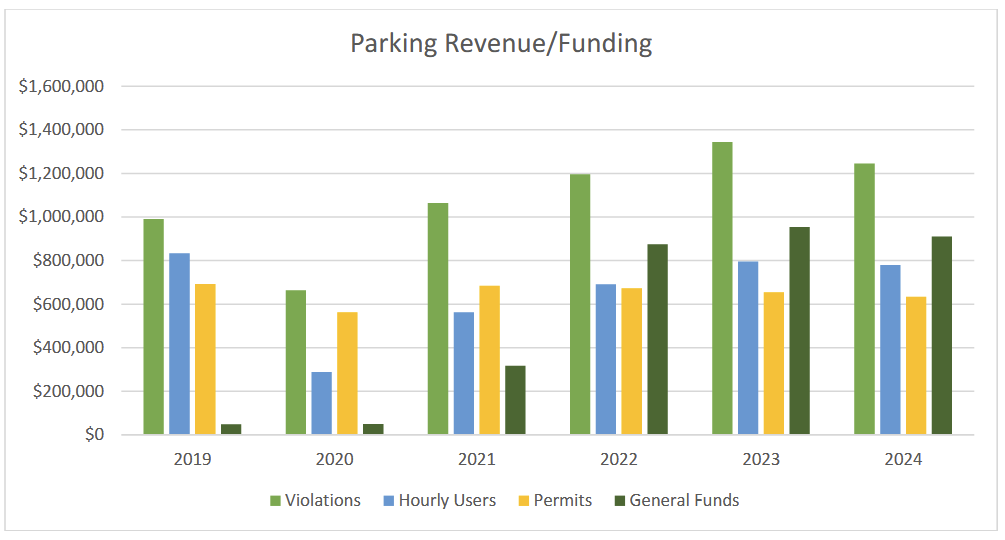
Financially, the current system is also on shaky ground. The City’s 2025 Parking Services Optimization Study found that revenue from parking citations, garage fees, and permits isn’t enough to cover the costs of maintenance and operations downtown[11]. For example, during recent years, parking revenue plunged (due to the pandemic and other factors), and the shortfall had to be backfilled with general taxpayer funds[12]. Major expenses like repairing parking structures or upgrading equipment are often paid out of the City’s General Fund or one-time federal grants, which means all Fort Collins residents are subsidizing downtown car storage, whether they use it or not[13]. As City parking staff explained, a sustainable parking system should ideally pay for itself – user fees from drivers should fund the upkeep, instead of siphoning dollars from broader public needs[14].
The proposed changes would right-size this upside-down approach. Under the plan currently under discussion, on-street parking in the downtown core would cost $1.50 to $2.00 per hour (rates comparable to or lower than many peer cities), and the two-hour time limits would be removed in favor of pricing managing the turnover[15]. In practice, this means if you’re making a quick stop, you’ll easily find a space and pay just for the time you need; if you plan to linger for a three-hour lunch and shopping, you can do so without running out to move your car – you’ll just pay a few dollars for the convenience of premium space. Importantly, garage and surface lot rates are expected to be slightly cheaper than street rates[16], which will encourage longer-term parkers (employees, all-day visitors) to use those off-street options. The aim is to keep the prime curb spots available for those who value them most (short-term errands, customers popping into a store)[17][18]. And if a driver doesn’t want to pay, they’ll still have options – for instance, parking a few blocks away in a free time-limited zone, or using existing transit/biking infrastructure which the city is also trying to better incentivize.
For downtown workers specifically, this shift does not spell disaster. In fact, it can reduce the daily burden of constantly moving cars or competing for time-limited curbside spaces. With garages expected to remain more affordable than on-street parking, and potentially expanded options for monthly permits, employees will have more predictable and less stressful parking alternatives. Moreover, reinvesting parking revenue into better transit, sidewalks, and bike infrastructure gives more people practical choices for how to get to work downtown without relying solely on driving. The system will become more functional and fair for everyone who needs to be there every day.
This switch to paid parking would not make Fort Collins an outlier – in fact, it’s the opposite. A peer cities review showed that 85% of comparable cities already have paid on-street parking[19]. Fort Collins is currently one of the few cities its size that still doesn’t charge at the curb[8]. Communities from Idaho Springs to Manitou Springs in Colorado have successfully implemented paid parking in their downtowns, and both saw their downtown sales tax revenues increase after introducing parking fees[19][20]. In other words, visitors didn’t vanish when those cities started charging a few dollars to park – people kept coming, and the areas actually became more commercially healthy. Fort Collins can take confidence from these examples: done right, paid parking will not drive shoppers away, but rather ensure that the experience of visiting downtown is better (with less circling for spots and more funds to reinvest locally).
Why Parking Fees Are Fair and Beneficial
A key principle behind this reform is fairness. Opponents sometimes argue that parking should be “free” because roads and public spaces are a public good. But it’s important to distinguish between essential public services and optional personal conveniences. Services like firefighting, policing, or public education are classic public goods – we all pay into them and benefit from them collectively, and their availability doesn’t diminish with use. Parking, however, is very different: it is a scarce, finite resource (a parking space can only be used by one vehicle at a time) and primarily benefits the individual using it at that moment. In this way, parking is more akin to a utility or service (like a bus ride, electricity, or water) where a user fee is appropriate. While Fort Collins currently offers fare-free transit, most services we rely on – like gas, electricity, or rideshares – come with a cost tied to use. Parking is no different. Asking drivers to pay a modest fee to occupy valuable public space downtown is a fair way to manage demand and cover system upkeep. In fact, revenue from paid parking could help strengthen fare-free transit by funding service expansions, improved bus stops, or better frequency – ensuring that people have real choices beyond driving.
When parking is “free” to the driver but paid by everyone, it means a person who never drives downtown is effectively subsidizing someone else’s decision to store a car on public property. Is that fair? The City of Fort Collins’ view – and the Strong Towns perspective – is that user fees align costs with those who use the service, creating a fairer system[13]. As one city Q&A response put it, with paid parking, “the people who use the parking system will cover its costs” instead of burdening all taxpayers[13]. This frees up general fund money for things that truly serve the public at large, such as emergency services, parks, or libraries, rather than spending that money on maintaining parking lots and garages for a relative handful of users.
Moreover, any net revenue from a new parking program can be plowed right back into the community in ways that benefit a broad range of residents – not just drivers. Fort Collins officials have suggested that extra parking revenue could support downtown enhancements like landscaping, street beautification, public art, better lighting, events, ADA accessibility upgrades, and even discounted parking passes for those who truly need assistance[21][22]. In Pasadena, California – a famous success story in parking reform – they did exactly this: all meter revenues from Old Pasadena were reinvested in that district, paying for improved sidewalks, historic building restorations, street trees, security, and marketing. This turned a once-neglected area into a thriving destination “at no cost to the businesses, property owners, or [general] taxpayers”, as Shoup noted[23][24]. People often say they don’t mind paying a fee if they know the money stays local for a good purpose. By creating a “parking benefit district” model – where the fees drivers pay are visibly funding downtown improvements – Fort Collins can build trust and demonstrate the direct benefit of the new system. It’s a win-win: drivers fund the maintenance of the parking they use and contribute to a more pleasant downtown that everyone can enjoy.
Finally, there’s a matter of treating parking like the finite commodity it is. In economics, when something is scarce and in demand, charging a price helps manage that demand more fairly than arbitrary rationing. Today, we attempt to ration free parking with time limits and aggressive enforcement. But that approach often fails – locals know the game of moving their car every two hours to avoid a ticket (indeed, City staff observed many downtown employees shuffle cars all day long[25]). This cat-and-mouse routine wastes everyone’s time and still results in full occupancy. A pricing system is simpler and more effective: those who highly value a prime spot will pay for the convenience, whereas others will choose a cheaper or free option a bit farther away or use another mode. In effect, pricing creates availability. Shoup’s research indicates the ideal occupancy is about 85% – meaning one or two open spots per block – and that the right price will naturally achieve this balance[26][27]. When prices are properly calibrated, people can reliably find a space near their destination without circling. Those who don’t want to pay will make different choices (walk, roll, ride transit, park further out, or come at a less busy time, etc.), which only helps reduce peak demand. Contrast this with a free-for-all system where the resource is free but chronically oversubscribed – leading to shortages and frustration.
In summary, user-paid parking is more fair, just, and efficient: it charges by use (like a utility), ensures the people using the resource fund its upkeep, and uses the power of pricing to make the whole system function more efficiently. This isn’t a matter of small fees for the sake of revenue. It’s a way to manage a limited public resource responsibly and bring transparency to a subsidy that’s quietly shaped how we use city space for decades.
More Turnover, Less Traffic: Making Downtown More Accessible
One of the biggest benefits of adopting paid parking is improving the accessibility and vibrancy of downtown. This may sound counterintuitive to those who fear that meters will chase away visitors, but evidence strongly suggests the opposite: properly managed parking means more turnover of spaces, which means more customers can park and patronize local businesses over the course of a day. Consider a typical free two-hour spot in Old Town: a savvy employee or all-day visitor might occupy that spot for 8 hours, moving their car a few times to dodge the time limit. That’s one car taking up a prime space all day. If instead there’s a fee, that long-term parker is incentivized to either pay (contributing revenue) or relocate to a cheaper garage or remote lot, freeing that choice curb spot for the next shopper. The goal is that a spot in front of a bakery or bookstore might see several different customers use it throughout the day, rather than being tied up by one vehicle. Local businesses actually stand to gain from this higher turnover. Donald Shoup recounts how, before Pasadena installed meters, employees monopolized the curb spots and shoppers had trouble finding parking; after meters and revenue reinvestment, Old Pasadena’s sales tax revenues shot up as more shoppers could conveniently park, and the area gained a reputation as a place people want to be[28][29]. As one observer quipped, Old Pasadena transformed into “a place where everyone wants to be, rather than merely another place where everyone can park free.”[29]
Fort Collins’ parking study anticipates similar outcomes: making parking easier to find and reducing the “circle the block” congestion[25]. If on-street spaces are priced, someone who just needs a quick 15-minute errand will likely always find a spot available near their destination – a small fee is a fair trade-off for that convenience. Meanwhile, someone planning to spend several hours downtown might opt for a parking garage (knowing it’s cheaper and now just as easy to use as on-street parking) or consider an alternative to driving. Either way, fewer people will be circling in traffic hunting for a free space, which makes the streets calmer and safer for people walking and cycling[30]. In fact, cities that have implemented smart parking policies often see measurable drops in traffic. For example, San Francisco’s SFpark pilot (which adjusted meter prices based on demand) resulted in drivers spending 30% less time searching for parking, significantly cutting traffic congestion and emissions in busy areas[31]. While Fort Collins isn’t San Francisco, the principle holds: eliminate the incentive to cruise around for freebies, and you eliminate a lot of unnecessary car trips downtown.
Encouraging a shift toward other modes of transportation is another positive effect. When drivers confront a parking fee, some will decide to carpool, take the bus, walk, or roll for some trips – especially if the city simultaneously invests in better transit and bike infrastructure. This is not about forcing anyone out of their car; it’s about giving people a nudge toward options that reduce strain on the system. Fort Collins’ plan aligns with broader transportation goals by nudging a few more folks to use Transfort or the city’s growing network of trails and bike lanes[30]. In turn, higher transit ridership can improve the system (the city notes that more transit use can help qualify for grants to expand bus service)[32]. It’s a virtuous cycle: a slight change in parking behavior can ripple out to strengthen other transportation choices, making downtown more accessible for everyone, including those who don’t drive. Imagine a downtown where it’s easy to park if you choose to drive, but it’s also easy to arrive by bus or bike because the city has invested in those amenities – that’s a downtown that truly welcomes all.
Learning from Other Cities
Fort Collins is not embarking on an untested experiment; plenty of cities and towns have gone down this road and reaped rewards. Let’s look at a few instructive examples:
- Pasadena, CA (Old Pasadena) – As mentioned earlier, Old Pasadena in the early 1990s was struggling: historic buildings were dilapidated and the area lacked investment, partly due to a perceived parking shortage. The city introduced paid on-street parking but crucially promised to dedicate all meter revenues to improvements in that district. The move was initially met with skepticism from merchants who feared losing customers to free parking elsewhere[33]. However, once implemented, the results were impressive: in the first year, 690 meters generated $1.2 million (about $80,000 per block) and the money funded new street furniture, trees, lighting, clean sidewalks, added police patrols, and more[34][35]. Businesses saw increased foot traffic and sales – because now customers could find a spot and enjoyed a nicer environment. Old Pasadena’s success has become a model for “parking benefit districts” nationwide. The area went from “grungy” to one of L.A.’s most beloved walkable shopping districts, all because parking was properly managed as a public asset. The lesson: charging for parking and visibly reinvesting the proceeds can revitalize a downtown.
- Redwood City, CA – This Bay Area city (slightly smaller than Fort Collins) was one of the pioneers of “performance-based parking.” In 2005, Redwood City eliminated time limits on downtown street parking and instead used price to manage demand. They set an occupancy target of 85%, and adjusted meter rates by location and time of day to achieve roughly one open space per block[36][37]. The most convenient spots cost a bit more, while peripheral spots and garages cost less[38]. This dynamic pricing approach meant that drivers could always find parking without circling, and the city could do away with arbitrary 30-minute or 2-hour limits that were “difficult to enforce” and annoyed visitors[39]. Redwood City also dedicated the surplus parking revenue to downtown improvements like better lighting and street cleaning[40], guided by a committee of local businesses to ensure the investments met community needs[40]. In the years since, Redwood City’s downtown has thrived with new restaurants, a cinema, and shops – all supported by a parking system that puts availability and customer convenience first. Notably, by proving that the sky wouldn’t fall, Redwood City helped inspire other cities (including San Francisco and Los Angeles) to pilot demand-based parking management. They showed that market-priced parking can solve the “parking problem” (too little availability) far better than free parking did[41][42].
- Ventura, CA – Ventura’s story parallels Fort Collins in some ways. It’s a mid-sized city that, as of the mid-2000s, still had mostly free downtown parking and was looking to create a more vibrant, walkable center. A consultant study recommended gradually converting free spaces into paid parking, projecting it could raise $2 to $3.7 million per year for downtown amenities like beautified sidewalks, more street trees, and extra street sweeping and police patrols[43][44]. The argument made to Ventura’s City Council was that as they aimed to make downtown denser and livelier, clinging to free parking would only get harder – the old approach would conflict with new urban vitality[45]. In other words, a dense, vibrant downtown can’t survive on a free parking diet[44]. Ventura moved forward with creating a parking benefit district similar to Pasadena’s model[46]. This example underlines a common theme: cities that want to invest in their public spaces, walkability, and overall appeal find that reforming parking policy is an essential piece of the puzzle.
- Colorado Examples – Closer to home, we have the aforementioned cases of Idaho Springs and Manitou Springs. These small Colorado towns introduced paid parking in recent years, mainly to manage heavy tourist traffic and generate revenue for infrastructure. According to Fort Collins’ study, both saw downtown sales improve post-implementation[19][20]. Meanwhile, Boulder, CO has had paid parking downtown for decades (and a well-utilized parking garage system), all while maintaining one of the most successful pedestrian shopping districts in the region (Pearl Street Mall). Denver charges for practically every curbside space in its central areas – it’s simply an accepted part of visiting any vibrant city. The point is, Fort Collins’ move to paid parking isn’t radical; it’s catching up with standard best practices that have been tested in cities big and small. Even tourist-heavy mountain towns like Aspen or Breckenridge use paid parking to ration limited space and fund local transit options. Far from harming these economies, it’s helped them balance visitor demand with small-town quality of life.
The common thread in all these examples is that parking is treated as a managed resource rather than a free-for-all. Cities set policies to ensure there’s usually an open spot when and where you need one – and that the community gets something back from the use of its public space. Fort Collins’ proposal incorporates many of these proven strategies: charging a modest rate for the busiest on-street spots, removing time limits (because price will encourage turnover), using pricing to nudge long-term parkers into underused garages, extending enforcement into evening hours (to cover the lively nighttime economy), and plowing the revenue into better maintenance and amenities. We can learn from the fears and successes of those who went before: Yes, there’s often initial trepidation that paid parking will scare people away, but time and again the reality has been increased parking availability, more funds for improvements, and downtowns that are better places to visit.
Building a Stronger Town for Everyone
At its core, the push for paid parking downtown is about valuing our community’s public space and making thoughtful, equitable choices in how we use our resources. Strong Towns principles emphasize fiscal sustainability and investing in things that provide a return to the community. Right now, free parking in downtown Fort Collins provides a poor return: it consumes city funds and staff resources, contributes to traffic and wear on our streets, and yet still leaves people complaining about lack of parking. We can do better by following a more financially prudent and people-centric approach.
By shifting the cost of downtown parking from the general public to the actual users, Fort Collins will free up money in the general budget that can be used for things that benefit all residents. Imagine more funding available to repair neighborhood sidewalks, build safer crosswalks, or support the bus system – improvements that help those who walk, roll, take transit, or simply prefer not to drive. Remember, about 20% of Fort Collins households have zero or one car (particularly renters, students, low-income families, or seniors), and even for those with cars, many choose not to drive to certain events or on weekends. These folks deserve a downtown that welcomes them with good transit and walking options, not just ample free parking for others. When we stop pouring general tax dollars into subsidizing parking, we can reallocate that money into making downtown a great place for people, not just cars. Better sidewalks, benches, lighting, street trees, public art, and events – these are the kinds of things that make downtown more delightful and inclusive, and they can be funded in part by parking revenues as the city has indicated[21].
Critically, a user-pays parking system aligns with the idea of economic productivity that Strong Towns often talks about. Land in the heart of our city is incredibly valuable – it should be used for the highest benefit of the community. Storing cars on that land for free is, in a sense, an underutilization. By charging a fee, we signal that this curb space has value, and we ensure it’s put to its best use (serving customers, enabling quick turnover for errands, or raising funds for public improvements when used for longer stays). Strong Towns advocates ending subsidies that distort our city economies; free parking is one of those subsidies. As one Strong Towns writer put it, our oversupply of no-cost parking is “a heavily engineered and artificial outcome” of policy, not a natural market result[47]. It leads to cities that are financially strained – more asphalt to maintain, but less taxable productive land per acre. By making this change, Fort Collins is taking a step to undue that longstanding policy mistake and move toward a more financially resilient model.
It’s worth noting that even under a paid parking regime, downtown parking is still a public service – it’s just managed in a smarter way. The City isn’t trying to make parking scarce; it’s trying to guarantee that parking is available when you need it. The vision is a downtown where you can typically find a spot within a block of your destination, because either the spot itself or a nearby garage space will be open. The fee you pay is a tiny fraction of your overall downtown spending (a couple dollars for an hour or two), but it’s contributing to the very amenities that make you want to visit downtown in the first place. And if you really don’t want to pay at all, you will retain options – whether it’s a free short-term section on the periphery or choosing not to bring a car. In other words, choice is preserved, but the default expectation that one can occupy prime urban space for free is adjusted.
A Healthier, Happier Downtown
Converting to paid parking is about treating downtown Fort Collins as the treasured place that it is. We pay to camp in natural parks to help fund their upkeep; we pay for utilities, toll roads, and rideshares that use public infrastructure. In the same spirit, a small fee to park downtown helps maintain that space and keeps it functioning well for everyone. Likewise, paying to park in our downtown will help keep it clean, safe, accessible, and economically vibrant[30]. It will ensure that those magical two-hour parking spots in front of your favorite café are more likely to be free when you swing by, because they won’t all be occupied by employees or all-day parkers. It will reduce the traffic chaos of people circling, which means a more pleasant experience for pedestrians and cyclists (and frankly, for drivers too, who won’t have to compete so fiercely). It will shift some car trips to other modes, helping us meet our city’s environmental and traffic safety goals in a modest but meaningful way[30]. And it will do all this while relieving the average taxpayer from covering the costs of parking infrastructure that they may or may not use[13].
Change is never easy, especially when it involves paying for something that used to be free. But the experience of many other cities – and the careful analysis done in the Parking Optimization Study – should give us confidence that this change is worthwhile. Fort Collins’ downtown is one of the great joys of living here: it’s the communal living room of our city, where we dine, shop, attend events, and bump into friends and neighbors. Investing in a smarter parking system is really an investment in downtown itself – making sure it remains healthy and inviting for decades to come. As the Strong Towns approach would say, this is about making a prudent choice today that yields a stronger, more prosperous town tomorrow.
So the next time you hear about the proposal to implement paid parking downtown, remember the bigger picture. It’s not about extracting fees for the sake of it; it’s about valuing our public space appropriately and using our resources wisely. A small parking fee can catalyze big positive changes. By embracing this move, Fort Collins can join the ranks of cities that have made their downtowns more user-friendly, economically robust, and truly welcoming to all – drivers and non-drivers alike. In the end, a couple of dollars is a small price to pay for a downtown that works for everyone.
Sources:
- City of Fort Collins Downtown Parking Q&A – official responses outlining benefits of paid parking[25][14][30].
- City of Fort Collins “Why Now” summary – describing the upside-down model and need for a self-sustaining parking system[18].
- KUNC News, “Visitors to downtown Fort Collins could soon be paying for on-street parking” – report on the 2025 parking study findings and proposal details (parking rates, time limits, peer cities)[10][15][19].
- Donald Shoup’s research in The High Cost of Free Parking – quantifying the massive subsidy of free parking and advocating market-rate curb pricing[1][2].
- Strong Towns articles on parking reform – explaining how free parking is not truly free and detailing Shoup’s 85% occupancy “Shoup test” for efficient parking management[27][7].
- Access Magazine (Fall 2003), “Turning Small Change into Big Changes” by D. Shoup – case study of Old Pasadena’s parking meter revenue reinvestment and its role in revitalization[35][29].
- CNU Public Square, “Two California cities look to right-priced parking” – examples of Redwood City and Ventura implementing market-based parking to improve downtown vitality[36][43].
- Henry Grabar, Paved Paradise (2023) – commentary on how free parking oversupply harms city life[3].
[1] [2] [7] [26] [27] [47] Free Parking Makes Me Wanna Shoup
https://archive.strongtowns.org/journal/2019/11/25/free-parking-makes-me-wanna-shoup
[3] Henry Grabar, Paved Paradise: How Parking Explains the World (2023)
https://www.booksoncities.com/p/henry-grabar-paved-paradise-how-parking
[4] Why Parking Should Pay Its Way Instead of Getting a Free Ride
[5] Parking
https://www.strongtowns.org/parking
[6] How to respond to the argument that parking is an environmental …
[8] [13] [14] [17] [18] [21] [22] [25] [30] [32] Downtown Parking Management Updates | Our City
https://ourcity.fcgov.com/downtown-parking-management-updates?tool=qanda
[9] [10] [11] [15] [16] [19] [20] Visitors to downtown Fort Collins could soon be paying for on-street parking | KUNC
[12] mccmeetingspublic.blob.core.usgovcloudapi.net
[23] [24] [28] [29] [33] [34] [35] .access23final
[31] [PDF] SFpark Pilot Project Evaluation – SFMTA
[36] [37] [38] [39] [40] [41] [42] [43] [44] [45] [46] Two California cities look to right-priced parking | CNU
https://www.cnu.org/publicsquare/two-california-cities-look-right-priced-parking
Leave a Reply